Tuesday, January 14, 2014

Scarpa 6000 double boot review by Dave Searle

High in the Dru Coulior all photos courtesy of Dave Searle


This is Dave's first gearreview on Cold Thistle, but hopefully not the last. Dave and a few other Brits are living and climbing hard in Cham. Likely more good alpine climbing done in a typical weekend there than in all of the USA every winter.


I respect the opinions of climbers out there and actually doing things. Ally, Jon, Willare a few I met in Chamlast winterthat are "doing it". Dave is right in there as well. His opinions are hard earned and worth the read.


You can read more about what Dave is up to here:


http://searler.com/


Scarpa 6000 review.


I have been using my Scarpa 6000 now for about a year and on the most part I have been really impressed with them.


Dave in his red chuck hut slippers, Spantik and 6000 at his side.

General Design and Features


When I was first on the market for a pair of winter boots (and this was my first pair) I was strongly recommend by lots of people to go for the La Sportiva Spantik. I tried them both on in the shop for hours, in different sizes and came to the conclusion that the 6000 fit me slightly better. This was perhaps the main reason I went for them in the end however I also prefered the design of the 6000 too. They seemed to be more nimble and precise and I prefer having a gaitered boot any day of the week as it keeps them drier when your wading through snow and it means that the laces aren't subject to any wear. The sole unit it thinner than on the Spantik which sacrifices warmth but gains precision.


Fit


I had a slight problem with heel lift after using them maybe three of four times. I didn't have this problem in the shop and it was strange that it developed over time. I have rectified that now with sticky back foam stuck to the liners around my heel and a heel raiser to lock my heel into the back of the boot. I would have probably had this problem in any boot as I do have particularly narrow heels. Now they fit like a dream. If your set on these boots then it is worth remembering that if you have a low volume foot like mine then they can be made to fit.


Lacing


To start with I was a fan of the lacing system, it seemed easy to tighten up and easy to use with big gloves but I pretty soon realized that the locking cleat eventually works itself loose after a few hours of climbing or walking. I originally combated this problem by tying a normal shoe knot over the top of the cleat but now I have taken it off completely and now I just use a reef knot to fasten them. I never feel the need to adjust the laces when I'm climbing so now when I'm tying them in the hut or at the bivi I use a knot that won't come lose and this seems to be the best option for me. I think the lacing system could do with a rethink in my opinion as I have had other friends who have had similar problems with it. Perhaps a beefier cleat or thicker, less slick laces which are easier tie?


Warmth


I have been really impressed with the warmth of these boots as well. I thought that they weren't going to be as warm as a Spantik but I have since realised it depemds entirely on your circulation and the fit as to whether or not you'll feel the cold. I have sat two nights out in them without a sleeping bag and I didn't have any major issues. The first and worst of the two was on the Colton/Macintyre on the Grandes Jorrasses. Me and my two buddies got benighted at about 4300m with only a two man man bothy shelter and half a karimat to share. It was November here in Cham and the ambient temperature was close to -15C and felt much more with windchill. Jim and Gav both had Spantiks and I was in my 6000ers and I was really worried about my feet but the only option was to sit and suffer.... which we did.... for 8 hours. The night passed slowly and I emerged with very minor nerve damage to my big toe (phew). Jim had the same and Gav was fine. I don't think the 6000ers are as warm as the Spantiks but if you have good circulation then these should be fine for what they are recommend for (winter alpinism and greater range climbing up to 6000m). I think my circulation is average and for most of the climbing I have done with them (alpine north faces in autumn and spring) they have been spot on. Light and dexterous enough for mixed climbing, warm enough for the kind of temperatures you encounter out here and stiff enough to plough up a 1000m of ice without your calves exploding out the back of your trousers.


Eiger N face

Wear


They haven't shown much sign of wear yet. I had a small nick in the orange fabric after their first days use scrambling over sharp granite boulders on my way up to the Carrington/Rouse on the north face of the Pelerins. I though that was going to set the tone for how they were going to fair but that is the only damage they have sustained in the year I have had them which I think is pretty impressive as I have done some long approaches on sharp granite moraine, mixed climbed in Scotland and they have been up six 1000m+ north face routes as well as a load of shorter mixed routes.


Crampon Compatabilty


One issue that I encountered with these boots was getting my crampons to fit. When I first got these boots I had a pair of plastic bailed G14 (older version). I strapped them on and started off up without really paying a huge amount of attention to how they fit. I felt pretty insecure on the first route and it was only on closed inspection when I looked at the set up that I realised the front points were only forward about 5mm or so from the front of the boot as supposed to 25-35mm as I would normally expect. I worked out that it was because the sole unit is really narrow at the front and it doesn't hold the crampon far enough forward. So back to the shop I went for a new pair of crampons (G20s). It was a hungry month after that! So be warned check your crampons on them first.


In an ideal world I would change two things about these boot.


1. I would make them tighter around the heel to combat heel lift. It might just be that I have really skinny heels but some other guy's I know who have them would say the same thing.


2. I would change the lacing system to something more reliable. Its pretty frustrating having your boots come undone on you when your ankle deep in snow, trying to hop about getting them done up again.


All in all they are really great boot, and have definitely become very popular out here in Chamonix and for good reason. After all Ueli Steck was the main man behind the design of these boots and he knows what to look for in a good boot! I'd change a few things like I've said but I'm really happy with them and if I was on market for a pair of winter boots again I'd make the same choice.


Colton/ Macintyre on the Grand Jorasses

Sunday, January 12, 2014

Dragonflies

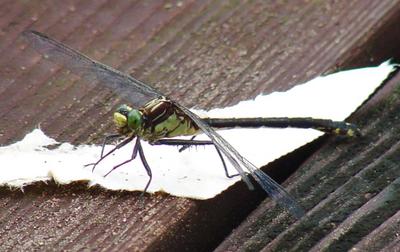
A green dragonfly seemed fascinated by a scrap of paper on the deck:


A slightly more aerial view of him:


I was creeping closer and closer, when a cat decided she needed to see what was going on, and kind of ruined the moment.

I think this is a Clubtail dragonfly (Gomphidae), but there are several greenish ones that look almost exactly alike to me.

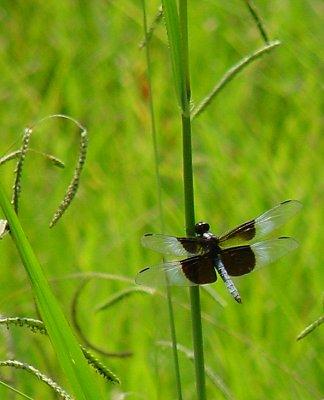
This one was easier:


Widow Skimmer (Libellula luctuosa). We see these all the time.

In looking up the dragonflies, I found a nice web site with lots of good nature pictures. The emphasis is on Georgia wildlife.

---

For your biweekly bird fix, visit the new I and the Bird!

Friday, January 10, 2014

Refurbishing Vintage Bicycles: Different Perspectives

[Manfred Dittler collection, image via waffenrad.at]

It has been so nice to see more and more people revamping vintage bicycles over the past several years, riding them, and sharing pictures with others. Seeing vintage bikes actively ridden and lovingly cared for feels as if history is "interacting" with our contemporary lives - reestablishing a sense of continuity that has been ruptured in many ways over the past several decades. But as the use of vintage bicycles grows more popular, it is worth noting that not everybody holds the same views on refurbishing them. For me, discovering these differences has been educational, and I will try to describe some of the approaches I have come across:


[Panther Damenrad, image via waffenrad.at]

The Full Restoration Approach

To "restore" a bicycle typically implies bringing it back to its former glory inasmuch as possible. If the bicycle is not in great cosmetic shape, then this may include re-painting the frame in a colour painstakingly matched to the original, finding new-old-stock original decals or replicas, and taking the trouble to locate well-preserved versions of the components and accessories, if the original ones cannot be cleaned up sufficiently well. The end goal is for the bicycle to resemble as closely as possible what it looked like when it was sold as new - be it the 1970s or the 1910s.


[Manufrance Hirondelle, image via collectvelo]

The All-Original Approach

In direct opposition to those who restore bicycles, are those who prefer to keep them all-original - meaning in whatever condition the bicycle was found. The reasoning behind this approach, is that a vintage bicycle is a piece of history and should be preserved in its found state. Some who adhere to this method will clean up the components and frame as much as possible - as long as it does not involve repainting or replacing anything on the bike. Others will take things to the extreme and literally leave the bicycle as is - including any dirt or rust that has accumulated on it. Somewill perform repairs, as long as the components remain original; while others believe that if the bicycle is not ridable without repairs, then that is how it should stay.


[somervillain's Shogun touring bike, image via lovely bicycle]

The Period-Appropriate Approach

This approach is somewhat similar to restoration, but is considerably more relaxed and is done with the intent for the bicycle to be ridden, not collected or exhibited. Those who prefer this method, typically clean up and refurbish the bicycle in a way that keeps its appearance period-appropriate without going so far as to replicate the original components, accessories and colour scheme. For example, the bicycle above has been repainted a soft blue - a traditional colour choice for vintage touring bikes, but not the original frame colour. The components selected are also traditional for the time period the owner wanted to evoke, but they are not the components that originally came with this bike. The period-appropriate approach is popular among those who want the bicycle to suit their tastes and riding style, while still paying homage to the era from which it came.


[Motobecane Super Mirage, imagevialovely bicycle]

The Updated Remix Approach

Some cyclists prefer to fit vintage frames with modern components - either in part or entirely. The reasoning behind this, is that while they may prefer the looks, ride quality, craftsmanship and other aspects of the older frames, newer components tend to be more comfortable and more convenient. This can include anything from using a modern style of handlebars, brake levers and cranks, to fitting the bicycle with clipless pedals and new high-tech lights. While the newer components are not even remotely original or period-correct, some owners will attempt to make the overall look of the bicycle harmonious. To others this does not matter so much, and they regard the vintage and modern mix as purely utilitarian. If I had to classify the current fixed gear modification trend (whereby parts of the frame are filed off and the bike is fitted with super-modern wheels and colourful components), it would go in this category as well. The degree of consideration that is given to the original frame is up to the owner.


[Jeunet porteur, image viasomervillain]

Over the past two years, I have spoken with vintage bicycle owners whose approaches run the full spectrum of these categories, and have at times been amazed by how strong views on this topic can be. Restorers are criticised for recklessly altering pieces of history. Those who keep vintage bikes original are criticised for not giving the bicycle a chance to "live again". Those who take the trouble to set up their bicycle in a period-appropriate manner are perceived as obsessive "retrogrouches." And those who put modern components on vintage frames are accused of butchering or "not caring enough" about vintage bikes. Personally, I can see the benefit in all methods, and I think that quite a lot depends on the bicycle itself - how rare and historically significant it is.The Co-Habitant and I have used the "updated remix" approach at least to some extent on most of our vintage bikes - but none so far have been historically valuable. What is your take on this, and what approaches have you used on your own bikes?

Thursday, January 9, 2014

There is a lot to Smile about at the Carnival

footnoteMaven has posted the Fourth Edition of Smile for the Camera at Shades of the Departed. The prompt this time around was "My Favorite Photograph". This edition is a biggie, with lots of new participants. The contributions were, as fM said "Some amusing, some loving, some rare, and some heartbreaking for how important they were to you." My contribution to the festivities was favorite foto - really?

And, then there is a call for entries for the next edition. "The word prompt for the 5th Edition of Smile For The Camera is Crowning Glory. Show us those wonderful photographs of hairdos and maybe even a few don'ts. Don't limit yourself to just hair fashion through the ages, got a great photograph of a hat, helmet, bonnet, or some other interesting headgear? Share!" There's more information for contributing to the carnival at the bottom of the post. Image courtesy of fM.

Sunday, January 5, 2014

Ski of Dreams


After spending 36 solid hours stuck in our tent at high camp, we were treated to fresh turns all the way back to Paradise.

Tuesday, December 31, 2013

The Black Hills and Custer State Park


Above: Bison (Buffalo)

Custer State Park is the largest state park in the country and is a wildlife lover's paradise. There is quite a variety of life within the park but the Bison, Antelope, Sheep and Elk (oh yeah, and the Prairie Dogs) steal the show. Custer State Park is where I saw my first Bison in person, in the spring of 2004. We saw quite a lot of them on this trip. The Antelope are pretty creatures, but by far the Prairie Dogs are the most fun to watch. They actually make you laugh as they scurry about, every now and then picking a fight with another Prairie Dog.

Below: Pronghorn Antelope


Below: Bighorn Sheep


Below: Prairie Dog


Below: A small windmill that we found during the day and decided to come back to later in order to shoot the stars and the moonlight.


Below: Roger shooting the sunset with the moon behind him.


Below: Roger took this picture of me taking a picture of this tree.


Below: Here's the picture that I took while Roger was taking my picture :-)


Below: Spearfish Falls


Below: Sunset over the Spearfish River

Double the Pleasure, Times Two

Easter Sunday I had the pleasure of meeting, in person, a gentleman whom I have admired from a distance for over three years. I first met Stephen Danko via his blog in late .. and then when we learned that we had the same personality type a few months later, we both thought it would be neat to meet each other sometime. It's hard to believe that we finally have! Thanks to Kathryn Doyle (whom I had met last August) and her husband, we had a delicious Easter dinner and a wonderful afternoon talking and discussing all manner of things. Thank you, Steve and Kathryn for a most pleasant time!

Kathryn Doyle, Stephen Danko and Becky Wiseman. April 4, ...

The weather on Easter Sunday was miserable. It was chilly and rainy with occasional torrential downpours. I was so glad that it was Steve that drove to meet us! I was even more pleased on Monday morning when I awoke to sunshine. It made the drive to Stockton to pick up Sheri Fenley (The Educated Genealogist) much nicer. After a big hug from Sheri, we drove on to Sacramento to have lunch with Craig Manson (Geneablogie), another of the early geneabloggers whom I've wanted to meet, like forever. (Craig has been blogging his genealogy since September ..!! and I found him in the fall of ...) There was no awkwardness in meeting, it was as though we had all known each other for a long time, and in essence we have. But there is nothing quite like meeting for the first time someone you have “known” online. I really didn't want our time together to end, it was so much fun! Thank you, Sheri and Craig, for an incredibly pleasant day.

Craig Manson and Becky Wiseman. April 5, ...

Becky Wiseman and Sheri Fenley, slightly out of focus but happy! April 5, ...

Craig has written his impressions of our get-together, as has Sheri (who also has more photos).

For some more fun, check out Randy's post for another recent GeneaBlogger Meetup in Australia! Cool, Randy!

Monday, December 30, 2013

Saturday Night Genealogy Fun :: Eli Yarian

Randy Seaver's challenge for this Saturday night is to pick an ancestor or relative with a military record and a gravestone then write about them.


I've chosen Eli Yarian, my 2nd great-grandfather, primarily because I haven't written about him previously!


Eli and his brother Benjamin enlisted in Battery D, 1st Regiment Ohio Volunteer Light Artillery on January 28, 1862 and were mustered out on July 15, 1865. Their brother David enlisted with Battery A, 1st Regiment Ohio Volunteer Light Artillery on August 11, 1862 and was discharged with the regiment in 1865.


Another brother, Jonathan, served with Company A of the 35th Regiment Indiana Infantry in which he enlisted in September 1864 while living in Noble County, Indiana. He and his wife, Jane Hook, had moved there in the summer of 1860. Jonathan joined General Thomas' command in Tennessee, and was with his regiment during the concluding campaign in the western part of the Mississippi Valley. He fought at Spring Hill, Franklin and Nashville. On December 16, 1864, during the second days battle at Nashville, Jonathan was severely wounded and taken to Cumberland Hospital, where his left leg was amputated. He was honorably discharged on May 26, 1865 and returned home to Noble County, eventually moving to Nappanee, Elkhart County, Indiana.


Some of the battles that Eli and Benjamin participated in were:

Munfordville, Kentucky... September 14-16, 1862

Lavergne, Tennessee... December 26, 1862

Siege of Knoxville... November 17 to December 4, 1863

Kingston, Georgia... May 24, 1864

Siege of Atlanta... July 28 to September 2, 1864

Franklin, Tennessee... November 20, 1864

Nashville, Tennessee... December 15-16, 1864
Eli was wounded at the Battle of Nashville, but not seriously. He was transferred to the Eastern Army at Fort Fisher and then to Cleveland where he was discharged in July 1865. In the spring of 1866, Eli and Benjamin moved to Elkhart County, Indiana and made their homes in Locke Township. In the fall of 1866 they both got married. Eli on the 22nd of September to Lovina Berlin and Ben married Eliza Coppes on the 25th of December. Lovina's family had lived in Portage County, Ohio and moved to Elkhart County in 1864 so it is likely that Eli and Lovina knew each other prior to coming to Elkhart County. Purely conjecture on my part, but it's possible that the reason Eli came to Elkhart County after the war was because Lovina was there! Maybe, maybe not.


I'm very fortunate to have a photograph of Eli, which was sent to me in May .. by Kathy Foster who is distantly related to William Walker, the husband of Eli's sister Susanna. I wrote about that “Happy Dance” moment in February ...


Eli's life came to a tragic end at about noon on Monday January 28, 1895 as he was assisting a neighbor in cutting down a tree. It fell in the opposite direction than was expected, striking him in the head. Death was instantaneous.


Eli is buried alongside his wife Lovina and two young daughters in South Union Cemetery, Locke Township, Elkhart County, Indiana. Note that his inscription has the year 1894. His obituary was published in the Nappanee News on January 30, 1895 and his estate entered probate on March 1, 1895. This photo was taken on July 12, ... I've visited the site several times since then, the last time being in the spring of ...


The inscription on the gravemarker reads:YarianLovina 1845 – 1932Eli 1839 – 1894

The inscription on the footstone reads:ELI YARIANCO. D.1ST OHIO L.A.

Eli and Lovina were the parents of seven children:

  1. Estella E. Yarian (29 Oct 1867 – 07 Feb 1935) married Theodore B. Irvine and had two children: Harry and Frederick.

  2. Willis Oscar Yarian (18 May 1870 – 07 Dec 1948) married Grace Melvin and had two children, Harold and Grace Maxine.

  3. Susie Lula Yarian (05 Jan 1872 – 29 Apr 1956) married Henry Phend and had 10 children. See Phend Family Index to Posts. Susie and Henry are my great-grandparents.

  4. Edith M. Yarian (19 Feb 1875 - 01 Mar 1875)

  5. Lydia Blanche Yarian (17 Sep 1878 – 03 Jul 1889)

  6. Mary Winifred Yarian (26 Dec 1881 – 22 Mar 1945) married Earl Glen Rosbrugh, had three children: Pauline, Mildred and Glenwood.

  7. James Arthur Yarian (31 May 1884 – 12 Feb 1930)


Raise and Fly


First the balloon which is about 3 stories high when inflated is unrolled from the large bag it is kept in. Then several people hold the bottom open while cold air from a large fan is forced in. At the proper time a propane burner which is attached to the top of the basket that holds the balloonist under the balloon is used to heat the air in the balloon. As the balloon heats it raises until it standing straight up. The balloon crew holds it on the ground with ropes until it is told it can go by the balloon referees. In this photo you can see the baskets, called gondolas with people in them. Each balloon is piloted by a licensed balloon pilot. Most balloons are from the United States, but there are pilots and their balloons as crews that come from lots of other counties.

Autumn in Paradise

I'm going to reveal a little about myself to you all in this here blogpost. . . . I Love Fall!

There are so many things about this season that I cherish. I love the changing colors of leaves, the smell of cinnamon baking together with apples in a pie, the smooth, creaminess of butternut squash soup (one of my favorite fall dishes).... and what better time to go for a hike then on a chilly day in October - wrapped in a fleece, wool hat and gloves, with few people around, it's hard to not enjoy these types of days. The latter is how I spent last Sunday, walking among fall foliage, listening to the birds overhead retreating south for the winter (they don't know what they're missing!) and the occasional rustle of branches as the deer grazed the final savory green bits before they too head down hill into the depths of the forests, protected for a while from the incoming nordic weather. My goal was simple - scout out the first half of the hike to Muir for the blog and report back to all our adoring fans (that's you) and be done. But my hike offered so many beautiful views and such a dynamic experience I couldn't leave it at a simple "Snowfield & Camp Muir Update".

So much is happening this Autumn at Paradise, it's hard to keep up -- every week is something new. Last week the old Jackson Visitor Center was closed, after almost 40 years in service to the public. Now this Friday is the "Grand Opening" of the NEW Visitor Center, also dedicated to Henry M. Jackson, the famed Washington state Senator. The dedication ceremony is open to the public and begins at 3:00 pm. Everyone is welcome to join us, along with some distinguished guests that include the Secretary of the Interior, our Regional Director and representatives from several local tribes, in celebrating this momentous occasion. The doors of the visitor center open to the public at 10 am on Friday. Building tours will be held at noon, 1:00 and 2:00 pm, leading up to the dedication ceremony, which starts off with the cutting of ribbon and finishes with the cutting of cake. If you have to miss the festivities, no worries, the new JVC will be operational on weekends from 10 am until 5 pm. Check the Park's most up to date Tahoma News for events and additional operational hours during the holiday season.

On Sunday, though, I cared little for the built infrastructure, being more interested in my natural surroundings. I have been away for several weeks and am amazed at the dramatic changes on the Mountain. I found it difficult to put my camera away; clicking away at the flora adorned in yellow, gold and fire-engine reds; the lush green of grasses and fluorescent moss sticking to small snow-melt falls; and surprisingly, an active amount of fauna foraging for food, also enjoying the beautiful day. Bears have been a common sight up at Paradise, but they usually are easy to scare and often flee once spotted. However, on my way down I noticed a group of visitors and several rangers eyeing a young cub that was fearlessly gorging himself within view of the Paradise Inn (And many spectators!). The cub's multi-colored hair was fitting, giving off a retro look, as though this capricious young cub had purposely highlighted his hair blond and spiked it up in defiance. The presence of law enforcement was a sign that the National Park takes their policy on NOT feeding wildlife very seriously, which is a ticketable offense at Mount Rainier and carries a fine of up to $100. View animals from a distance and please DO NOT feed them.
~ Keep Wildlife Wild! ~

Not only was I able to enjoy the splendors of Autumn, but I also received a glimpse of Winter - not far away it seems. Recent precipitation brought snow above tree line, creating a stark contrast on the hillsides; a white band above and green below. Within a mile or so of Paradise you can walk from Fall into Winter, it's quite an amazing experience really. Snow coated the ground from well below Panorama Point and then up, covering the recently turned red leaves of shrubs and lingering flowers that managed to keep their petals this long.

On my descent, several folks inquired as to the 'views'. Hikers may not have seen Mount Rainier on Sunday, but there was plenty more out there to enjoy, you just need to take the time and look. I only wish I had been going further along up the trail to Camp Muir. Conditions there this weekend were snowy and windy, but many times the clouds parted above, exposing a starlit sky and tranquil surroundings. With few climbers going up this time of year, anyone in search of some peace and quiet and a way to escape the hustle and bustle of the city, will enjoy the solace at 10,000 feet. Just be prepared for some cooler weather and snow. Check out recent conditions posted about the Disappointment Cleaver route.

Enjoy the photos posted in the blog, better yet, come on out to see it all for yourself.

Thursday, December 26, 2013

Cool-Season Vegetable Seeds


Fall starts tomorrow, and that means it's time for cool-season crops. I ordered a bunch of heirloom lettuces from the Seed Savers Exchange, and picked up some arugula, chervil, mâche, and Chioggia beet seeds at a local nursery.

I've already planted some of the 'Rouge d'Hiver' lettuce in a wooden wine crate.

Anyone else have some cool new vegetables to share?

Wednesday, December 25, 2013

Fashion Friday. Maximum Style.


Remember Al ? He's been hanging around a bit. Sometimes he needs encouragement. Frey offers a few words.Separation Anxiety starts at the little hobbit hole, so I crawled in for a fresh perspective.Al clowned it up of course.


Do you like either of these shots? Or does the perspective screw with you too much?I like both, but I couldn't decide which works better.You decide. Post a comment. Be firm, but kind.


I could look at Al all day, but over at our sister site Red Phoenix Style the girls have styled up another runway show. This time for the first anniversary ofBrisbane's most wanted hairPanic Hair.jjobrienclimbing sent Sandra Phoenix along to bring back the look.


So much hair, so much colour.All the fabulous jewels are available online from Red Phoenix Emporium or in store at The Tribune.


Climbers, you can celebrate with me as my first jewellery design for Red Phoenix, the Omiyagiwas ordered by an unknowncustomer in New York. Yay for international jewellery sales!


What? You want more Al? OK just one more.


Welcome to our newest follower Bjorn Lyngwa

How do you put that slash through the "o" ?